While this may not be an original idea the aim of this blog is to listen to all 1001 albums within the better part of four years, averaging five a week. Let's see if I make it and expand my music taste along the way.
Why do girls scream at musicians they love? This is one of those questions that crops up over and over again for me, and it has twice in the last twenty-four hours. The first time occurred yesterday afternoon as I was watching the first half hour of the Tina Turner biopic What’s Love Got To Do With It? (side note: very good film with amazing performances from Angela Bassett and Laurence Fishburne), in this example I agree it’s a film and so the behaviour of the women/girls shouldn’t be taken verbatim. The second time though was while I was listening to today’s album, James Brown’s Live At The Apollo. Whether it be through excitement or not it is still, as a guy, a very strange phenomenon to behold.
I guess that the screaming of girls is just another one of those tell-tale signs that an artist has got charisma. This is a word that keeps cropping up as I do the write-ups for live albums, so I am guessing that this really is one of the keys behind the what makes one of these a great album that is therefore featured on such a list. There are of course exceptions to this rule, Ellington At Newport 1956, but in general this works out.
However, in the case of Live At The Apollo, I know that there is charisma. I can hear the screams and the cheers of the women in the audience. I can also hear it in his voice as he whips the crowd into a frenzy. Yet, it’s conveyance across the speakers and into the fibres of my being are zero. While I understand that this will also be because he danced around this a mute point as this is album achieved it’s place on it’s musical merit rather than by those of James Brown’s steps. If Live At The Apollo were to be solely judged against the other live albums so far encountered on the list it still lies somewhere near the bottom of the pack, still some way above Ellington at Newport 1956 but doesn’t match the majesty of At Mister Kelly’s or the sheer wow-factor of Live At The Harlem Square Club. That isn’t to say that this isn’t a good album, as it is. Ratings wise it places about the same as Sunday At The Village Vanguard which I did also enjoy.
The real highlight, aside from laughing at the reactions of the women in the audience, is the ten minute epic that is Lost Someone. This is not a track to match the sheer energy of Sex Machine but this is James Brown raw and unplugged. It feels that all of the funk artifice has been stripped away leaving behind this man bearing his soul to a sparse orchestration. If it wasn’t for the sheer power of his voice it would fall flat on it’s face, but in the hands of this professional it is perfectly executed. That is not to say that the energy of the closer Night Train isn’t at all welcome.
In the end Live At The Apollo comes to symbolise a lot of the problems of a live recording for a lot has become lost in the process of transferring it from the performance onto vinyl and now to mp3. I am sure that if I were there in person with the magnetic personality of James Brown at the helm of this show’s Night Train I would happily be in the snack cart buying a bag of pretzels as I enjoyed the ride of my life. However, without seeing him dancing around and without the atmosphere I am left a little bit cold which is a shame.
6.5/10
Fab Four: I’ll Go Crazy Think Lost Someone Night Train/Closing
Why did I start this blog? Simple, to try and listen to as many different music genres in such a way as to broaden my horizons. It is also true that I knew from the offset that there would be both albums that gave me joy (Live At Harlem Square Club) as well as those that would give me unadulterated headaches (Palo Congo) but I ascertain that with every listen of every album I will gain a greater understanding in the evolution of music in such a way that I can pursue the dream of writing for a magazine such as Q or Rolling Stone. In a historical context the sheer number of jazz albums only goes to accentuate the role this genre had on music as a whole. It allowed a huge amount of experimentation and improvisation on the only platform who had their ears well and truly poised to listen. In my eyes it is the only art form that never flinches in it’s attempt to bring order and appreciation to music full to the brim with discord and as such I have a great deal of respect for what jazz artists try to undertake.
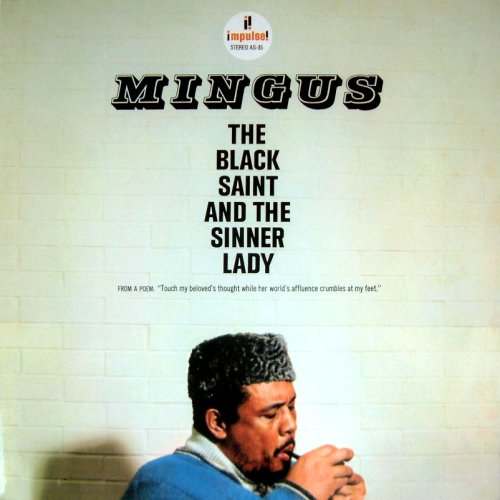
However, for me the world of avant-garde jazz appears more than just a gentlemen’s club that refuses me entry based on my appearance but one that barrages me until I reach for the Anadin. That’s right people, this is the first album which can be attributed the following three word phase:
I hated it.
Nothing works here for me. The music is a massive jumble of elements so entrenched on simultaneously juxtaposing itself with one element while complementing another that it leads to a mass confusion which makes me wonder if this is the musical equivalent of a Jackson Pollock painting. There is no denying that a lot of work must have gone into this album though. Charles Mingus and whoever produced this album went out of their way to add layer upon layer of instrumentation in order to make this a richly woven tapestry of a jazz experience. It therefore both annoys and saddens me that I am unable to partake in this as well as the other albums that I have listened to previously. Another thing that needs to be noteed is that towards the end of the final monster track I began to hyperventilate.
This review may appear to be a tad melodramatic, and you would be right. Having read back on what happened, since I usually make notes on the computer in order to aid the write-up, even now the way that my body actually reacted to this album is perplexing to say the least. Nevertheless this album needs a rating that shows how much I disliked it while still leaving wiggle room for the possibility of lesser albums to be encountered along my journey. Dear god no.
2.0/10
Fab Four: You’re kidding right? Listen to Sam Cooke again.
Yes ladies and gentlemen this is another live album that I am reviewing. When I saw that this was another in a long list of live albums the question did dawn as to why there are so many essential ones during this time. After all, it is not as if artists don’t produce live albums anymore. While I have some understanding as to why live jazz albums appear on this list, due to the largely improvisational nature of their craft, but those of other genres just didn’t make sense to me. Then the idea dawned on me as I began to listen to Live At Harlem Square Club.
Maybe it is because in their studio recordings the artists just as Sam Cooke, as well as others like Sarah Vaughan, they become so restrained by the needs to sell records to the masses that so many compromises that it is in these live albums that some artists finally reach their full creative potential and produce their best work.
So, the album today is Live At Harlem Square Club by Sam Cooke, and with this is the first true soul album to appear on the list. Originally recorded, as expected, in 1963 and released in 1985 it did make me wonder why it isn’t considered an eighties album. This may appear to be an odd thought to occur but since there is a live Bob Dylan album recorded in 1966 but listed as a 1998 album it’s a valid point. A point that really has no bearing on Sam Cooke’s album and as such this idea is now ceremoniously dropped, that is until I review Live 1966.
If there is one thing that needs to be said about Sam Cooke it is that this guy had charisma by the shed-load. If the recording is to be believed, as it should be, then he had this audience feeding out of the palm of his hand. When he says to scream and shout by Jove do they scream and shout. When he says twist you just know that the entire crowd is there in front of the stage twisting away. The second thing that is needed to be said is that he is able to make one hell of a show. He has single-handedly raised the bar for all the albums on this list. With his soulful voice and his electric performances Sam Cooke has made sure that Phil Spector’s A Christmas Gift For You didn’t hold the title of ‘Best Album So Far’ for anything more than a day.
But what is it makes Live At Harlem Square Club the best album on the list so far? So far this is the only album that is without a duff track. That’s right. If it wasn’t for the fact that I had become so attached to the concept of having a Fab Four at the end of the list it would be recommended that every track on this album is essential listening. However, if I am pressed to pick out the best tracks on this album then the honourable mentions would have to go to Cupid and Chain Gang. Yes, I am aware that both of these tracks are very early in the running order of the album but they are the best of the tracks. Chain Gang makes you want to get up and do dance like Johnny Bravo whilst Cupid is just one of those immortal songs that really does mean as much nowadays as it did back then.
Timelessness in an album is pretty much a rarity since every album has a telltale sign of the times whether it be a musical style, a particularly used instrument or cultural references that have become lost in the quagmire of a shared consciousness, yet this doesn’t have any of this. A factor to this may be that we recently had a sixties musical resurge. This has taken the forms of Amy Winehouse, Christina Aguilera’s Back To Basics and Duffy, who tries and fails to replicate the wondrous Dusty Springfield, so an album like this doesn’t sound too alien. However, these all tend to have a better production value compared with those of the sixties, including Live At Harlem Square Club. So why doesn’t this factor date this album? Pure and simple, it’s a live album. It’s production values are pretty much the same as those of Bjork’s Live Box or Madonna’s attempts that proved she couldn’t sing live.
Thus Sam Cooke, likely through sheer accident has given an album of class, genius and timelessness that all artists dream of. As such I am honoured to present Live At Harlem Square Club with the first ever 10.0.
10.0/10
Fab Four: Chain Gang Cupid Bring It On Home To Me Nothing Can Change This Love
I realised that in taking part in this 1001 album challenge I would be subjected to some forms of absurdity. However, where I previously thought this would be owned by the high numbers of appearances of butter-spokesman John Lydon, reviewing Phil Spector’s A Christmas Gift For You over the course of a warm summer’s day really does need to take the top prize. However, since this album itself was recorded during a hot summer in Los Angeles maybe I really am listening to this album at the optimum time.
Ok, maybe not. In the end though this is an album just like any other, the fact that this is a Christmas album is merely incidental. Another incidental occurrence is that Phil Spector is now in jail for second-degree murder. Neither of these things really should affect how I judge this album, but we all know they will as I am human after all.
This is the first album that I have encountered on my musical odyssey that can be considered as big production. Phil Spector and his Wall of Sound production method are well and truly resplendent throughout this offering bringing layer after of horns and percussion and god knows what else without ever drowning out the vocals. This thick, decadent production has the greatest presence on tracks such as Winter Wonderland and Frosty The Snowman where it acts as the perfect accompaniment to the songs playful aspects and inspire merry dancing around the room. Personally the only other Christmas song that gives me the same feeling is Mike Oldfield’s In Dulci Jubilo released some 13 years later.
While there are many collaborators on this album the songs featuring Darlene Love shine the brightest with the joy and wonder of the season truly coming across in her performances. This fact is what cemented her role as the singer of Christmas (Baby Come Home) as her vocals on this are flawless and emotive, which begs the question as to what became of her singing career. While I could go on praising her vocals on the album’s two best tracks, Marshmallow World and Christmas (Baby Come Home), I will refrain from doing so through the fear of sounding like some rabid fan girl. This is by no means belittling the efforts of the other contributors as they all provide their own magic to this mix. The highlight of the other collaborators has to be Santa Claus Is Coming To Town where The Crystals hold their own against the backdrop of a barrage of bells and chimes.
The fact that this album raised the bar for all Christmas albums to come is no accident, it really is that good. In fact it is in my opinion that there has only been one other Christmas album since that equals the magic of this one, and is by no means one of such production values as Phil Spector provided. Now that he has been mentioned it is time to reveal the one song featured on this album that has indeed prevented me from giving it a perfect rating. Silent Night.
If you have listened to this album before you will know what I am referencing. To this day I will never understand why Phil Spector felt the need to ruin such a beautifully orchestrated version of my favourite carol. Oh wait I know, it’s the only moment that his voice appears on this album. While this is meant to be a message of thanksgiving it ends up just being plain creepy and as such has ruined a 0.5 off the total rating. This is truly a shame as otherwise I may have had the first 10 on my hands. Oh well, there is always next time.
9.5/10
Fab Four: Santa Claus Is Coming To Town Marshmallow World Winter Wonderland Christmas (Baby Come Home)
Right, now I have made my miniature apology/warning it is time to attend to matters at hand. Bob Dylan is one of those artists that I have had a longstanding history of ill-feeling towards. This is namely because in all the music presses he is just unable to put a foot wrong. Whenever he releases an album of new material, or a collection of B-Sides he never deemed good enough for general release until 40 years later, he is always able to garner amazing reviews and appearances on end of the year lists. So, without ever giving an album of his a proper go, I already labelled him as one of those untouchables who well established magazines have to laud with the fear of looking stupid. I think I made this rant yesterday concerning the Beatles but since Bob Dylan is still pulling this in the noughties it’s a bit more personal.
Needless to say I didn’t go into my first listen of The Freewheelin’ Bob Dylan with an open mind. Part of me was desperate to prove other reviewers wrong so I could point and jeer at the emperor as he took a stroll around the block wearing nothing but a guitar and his trusty harmonica. When I talked about this it was suggested that this was because I wasn’t smoking pot. While this may appear a tad flippant it isn’t entirely false. While I do not condemn or condone marijuana it is true I wasn’t in the mind set for such an album. In a day where I have listened to albums by Kanye West, Florence & The Machine and Frankmusik this just jars. So I tried to mentally reset myself into whatever setting it is that allows me to enjoy Devendra Banhart’s Rejoicing In The Hands. And what would you know, it actually worked. Suddenly, having done this, I caught myself saying “this is actually good ” whilst listening to A Hard Rain’s A-Gonna Fall.
I am not going to suddenly say that this is one of the best albums that I have ever heard though. While there is a great proportion of songs that I think are really good, there is a reason Blowin’ In The Wind is immortal, there are some that should not have made the cut. The one that instantly comes to mind is Down The Highway where nothing sounds right to me, his lyrics and his guitar strums just do not work. This is in stark contrast with Bob Dylan’s Dream which has everything flowing perfectly, I don’t even mind the harmonica interludes. The same is true with his arrangement of Corrina, Corrina which is so beautifully delicate that you forget that Bob Dylan can not sing. Fact.
The Freewheelin’ Bob Dylan is a good album, but it doesn’t grab me by the shoulder with the genius it has been attributed with and, as Bob Dylan goes, I am still far from being one of the converted.
7.0/10
Fab Four: Blowin’ In The Wind Masters Of War A Hard Rain’s A-Gonna Fall Bob Dylan’s Dream
Before I start off this review for The Freewheelin’ Bob Dylan I believe an explanation is required as to my personal listening habits and how it’ll therefore be an influence on my musical taste. For me there are three main flashpoints that crop up again and again in what I would consider to be my favourite songs and/or artists:
Production: A lavish production with many layers is preferred if I am being honest.
Female: Yes, like I mentioned in my first post, I have an extreme preference in favour of female vocalists. Personally I believe that they are able to achieve a greater vocal prowess than most men and deliver their songs with a greater degree of…
Emotion: The song needs to get me on some emotional level. If it is able to take my breath away this is the most important component. The highest weighted of the three, which is how Sufjan Stevens remains one of my favourite artists of all time.
This has little to do with the albums per se but it has a lot to do with how I am going to review them. And as such this is a song that appears on one of the albums that ticks all my boxes, just so that you know what I mean:
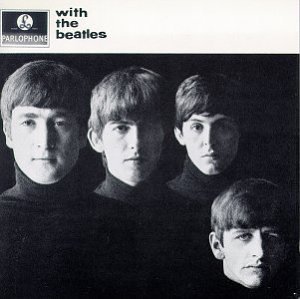
With this review I hereby touch upon the first of this list’s great leviathans. I say this because With The Beatles stands as the first of seven inclusions, with the only other acts matching this being David Bowie, Neil Young and Bob Dylan. While this may be very impressive, and these acts have undeniably been a huge influence on music as we now know it, I have a bit of a bugbear with how modern day reviewers act around them. On some review sites, not naming names, it appears as though the complete Beatles catalogue are given a 100% rating which to me just appears suspect. This is especially since in reviews of this album they note gaping flaws in it and yet still give it a 5 star rating. While being critical about 40 year old albums may appear to an exercise in futileity it would be constructive to talk about these albums without the kit-gloves, which is what I try to do. That isn’t to say though that With The Beatles isn’t a good album, as it is, but it still has flaws and no matter how many seeds of future greatness that I can see, where there are many, those alone shouldn’t guarantee it a 10/10 rating for me.
In such a fashion I am going to start with what I deem to be the great flaws of the album. This is, namely, the sheer number of covers. This may seem unfair for most artists in this era tended to produce albums with a large number of standards on there. There are exceptions to this rule, such as Fats Domino and Dave Brubeck, but if you look at the linear notes to most of the albums I have reviewed there are not many albums where a quarter (or more) of the tracks are original compositions. While in the case of Ella Fitzgerald this was fair enough as she was a great interpreter with an amazing voice this is not true for The Beatles.
On With The Beatles there is an exact 1:1 ratio original songs to covers and, sadly, it is very easy to discern which are which. Apart from Please Mr. Postman, which I think is a brilliant interpretation, these covers all fall a bit flat. The worst offender to me being Smokey Robinson’s You’ve Really Got A Hold On Me and Roll Over Beethoven where the arrangements and harmonies are jarring and as such do not really work. As such a lot of these just end up sounding derivative and forgettable.
However, when the Beatles are singing their own material you can not flaw them. Their songs are filled with spirit and the promise of what is to come. Whether it be the opener It Won’t Be Long or I Wanna Be Your Man you can really see what is to come in their future as no longer feel the need to pepper future albums with covers. The main highlight of this album for me though is Don’t Bother Me, the obligatory sole track written by George Harrison. This, to me, could be one of the best tracks I have yet heard by the Beatles as while it may not be the most complex of their songs it is one of musical simplicity and emotionality that just works really well. It also does a rather back-handed service by bolstering up the contrast between the opening four original tracks and the first of the covers. Almost like the Beatles saying in the opening ‘this is who we will be’ then saying ‘this is what we have to be to gain our creative freedom’
In the end it is easy to damn rather than praise and this review doesn’t exactly give equal footing to both sides, something which is hard to do. This may cause the rating to be a surprising one but, all things considered, this is a very good offering.
7.5/10
Fab Four: It Won’t Be Long Don’t Bother Me Please Mr. Postman I Wanna Be Your Man
 Why do girls scream at musicians they love? This is one of those questions that crops up over and over again for me, and it has twice in the last twenty-four hours. The first time occurred yesterday afternoon as I was watching the first half hour of the Tina Turner biopic What’s Love Got To Do With It? (side note: very good film with amazing performances from Angela Bassett and Laurence Fishburne), in this example I agree it’s a film and so the behaviour of the women/girls shouldn’t be taken verbatim. The second time though was while I was listening to today’s album, James Brown’s Live At The Apollo. Whether it be through excitement or not it is still, as a guy, a very strange phenomenon to behold.